


Influencer Fatigue
I Don’t Want to Be an Influencer. I Just Want to Do Good Work.
Somewhere along the way, running a business became about much more than doing the actual work.
Now we are told that if we want our businesses to succeed, we must constantly post on social media. We need a website, a blog, a Facebook page, a LinkedIn presence, and perhaps a TikTok or YouTube channel. We must post regularly, engage with everyone, feed the algorithms, build an audience, and somehow funnel all those followers toward our businesses.
The more content, the better—or so we are told.
Nearly everyone seems to be trying to become some version of a social media influencer. People are chasing that magical number of followers that might finally allow them to earn money from the content they create while also bringing attention to the work they actually do.
I have to admit that I started going down that path myself.
I wrote a book. I would love to say that I wrote it entirely for altruistic reasons. There were certainly some of those involved. I wanted to tell the truth about the notary signing agent business. I wanted new notaries to understand what the work really involves, and I wanted experienced notaries to feel seen.
But that was not the whole reason.
I had also read that writing a book establishes you as an authority. It makes you appear more credible and professional, and it can help bring attention to your business. Many people who are successful at what they do eventually write a book, so I followed the formula that everyone else seemed to be following.
The book has helped me. It has brought attention to my business and strengthened my online presence. I am glad I wrote it.
But lately, I have been questioning the larger system we are all participating in.
I remember when another notary first began building her social media presence. She posted a “tip of the day,” and the first tip I saw was to make sure you bring plenty of blue pens to a signing.
I laughed.
A bag full of pens is practically standard equipment for every working notary. We carry blue pens, black pens, backup pens, and probably backup pens for our backup pens. At the time, I remember wondering how desperate someone must be for content if “bring plenty of blue pens” had become the tip of the day.
To be fair, she kept working at it and has built a respectable following. She is ahead of me in that regard, so perhaps she understood the game better than I did.
Still, the memory has stayed with me because it represents something larger. When we are expected to post constantly, we eventually begin turning the most ordinary observations into advice. Everything becomes content. Every appointment becomes a story. Every inconvenience becomes a lesson. Every disagreement becomes a debate. Every person feels pressure to present themselves as an expert.
And every expert is competing against thousands of other experts for a few seconds of attention.
I am becoming fatigued by the whole thing.
This constant competition for visibility seems to breed an enormous amount of judgment. People scrutinize how everyone else works. They argue over tiny differences in procedure. They build authority by pointing out what other people are supposedly doing wrong. Sometimes it feels as though we are no longer simply doing our jobs—we are performing our jobs for an online audience.
There is value in sharing information. I have learned from other people, and I hope other people have learned something from me. Social media can help small-business owners reach customers they never would have reached otherwise. My own writing and online activity have helped people find me.
But there must be a point at which promoting the work begins to take too much time and energy away from doing the work.
I am a notary signing agent. My real expertise was not created by followers, likes, posts, or algorithms. It was developed through thousands of appointments, hundreds of thousands of miles, long days, difficult situations, mistakes, judgment calls, and years of showing up when I said I would.
That experience exists whether the internet applauds it or not.
Lately, I have felt more like putting my head down, doing the job well, and trusting that what is meant for me will come to me.
Perhaps that is not the best social media strategy. Perhaps the algorithms will punish me for failing to post often enough. Perhaps someone else will gain more followers by offering another tip about carrying blue pens.
That is okay.
I do not need a million followers to prove that I know how to do my job. I would rather have the trust of the people who have actually worked with me.
Maybe success does not always have to mean becoming louder, more visible, or more influential. Maybe sometimes success can simply mean becoming very good at what you do—and allowing that work to speak for itself.
Reality of Compensation
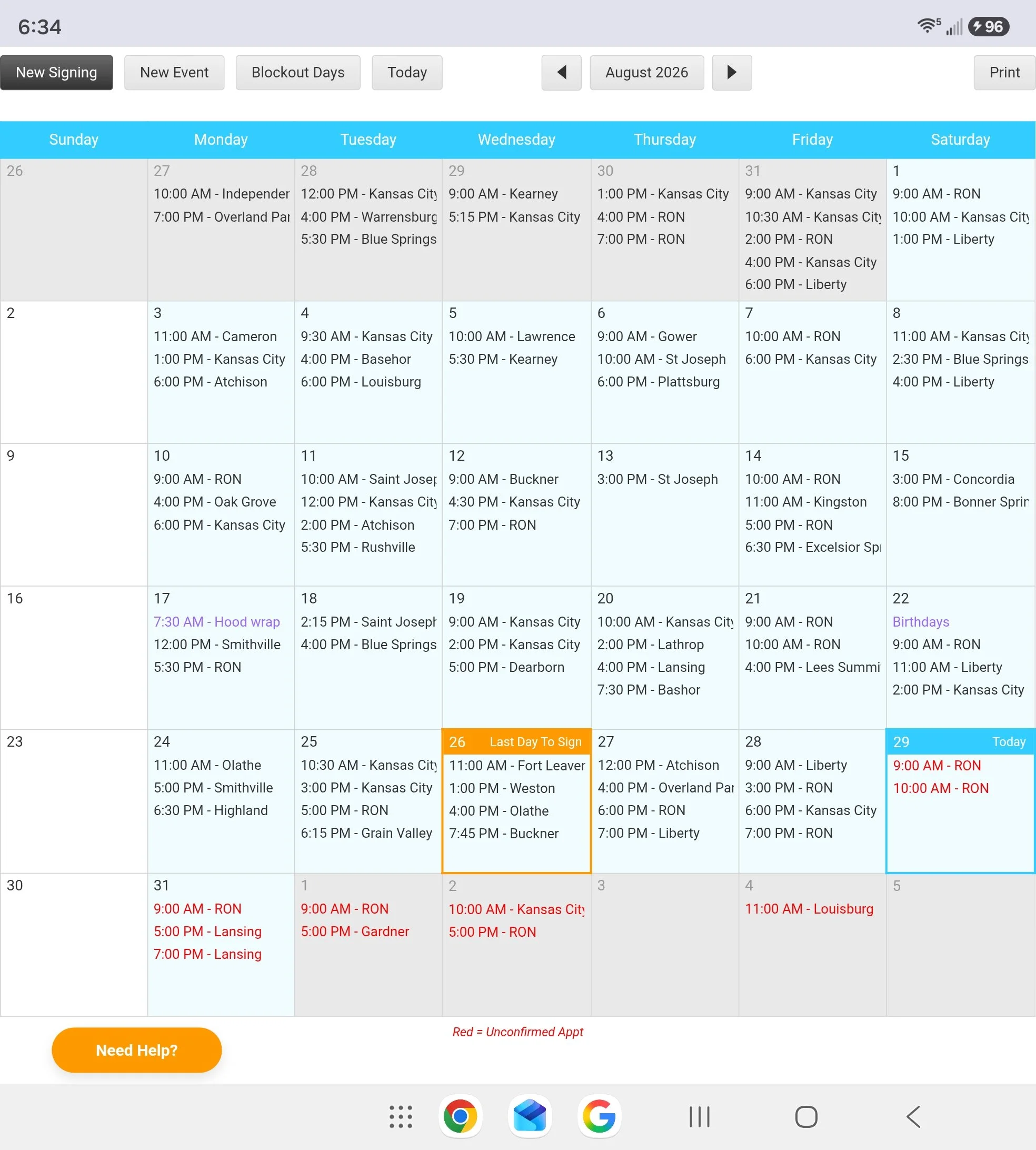
As the month draws to a close, I have five signings left to see through—assuming none of them cancel.
This has been a pretty typical month for me. I work as much as I can, every month, but the final numbers depend largely on how busy the schedulers are and how “generous” they feel like being.
Last year, their collective generosity decided that all this work was worth about $27,000 after expenses. They didn’t know exactly where the numbers would land, but they certainly knew they weren’t paying much.
When business is busy, companies are more willing to pay experienced notaries like me a little more. When things slow down, experience seems to matter much less. There can easily be a $2,000 difference between my lowest and highest months—but the effort I put in is exactly the same.
That is what business ownership looks like. There are no guarantees, except that we will work ourselves silly trying to make it work.
Some people look at numbers like mine and say they prove I had no business writing a book because I cannot teach anyone how to make six figures. But that is exactly why I wrote it. People have been bamboozled into believing that six figures is available to anyone who is smart enough or works hard enough. I do not believe the gurus making those promises can be trusted.
Others assume I must not be very good, or that I simply work for the wrong companies—as though generous signing companies grow on trees.
Here is what I know: I would never be trusted with this many signings, month after month, if I were not good at what I do. I carry people’s private financial information. I help them refinance, purchase, or sell one of the largest assets they will ever own. If companies did not trust me to handle that responsibility correctly, my calendar would not look like this.
My book was never intended to sell a six-figure fantasy. It was written to provide a dose of reality—and that is exactly what I meant it to be.

A Notary's Authority is Limited.
A Notary’s Authority to Administer an Oath Is Not Unlimited
There is a practice among some Notary Signing Agents that deserves a closer look: administering one broad or “blanket” oath at the beginning of every mortgage signing.
The reasoning often seems simple enough. There may be several documents in the package requiring jurats, so why not swear the borrowers in once at the beginning and consider the oath requirement satisfied for everything that follows?
The problem is that a mortgage package is not one notarial act.
It may contain numerous documents requiring no notarization at all, several requiring acknowledgments, and perhaps a few requiring jurats or other sworn notarial acts. Each certificate represents a particular notarial act with particular requirements.
An Acknowledgment Is Not a Jurat
This distinction matters.
With an acknowledgment, the signer acknowledges executing the document for its stated purpose. The signer is not being asked by the notary to swear that everything contained in the document is true.
A jurat is fundamentally different. The oath or affirmation is an essential component of the notarial act. The signer is swearing or affirming to the truthfulness or accuracy of the statements contained in that document.
Those are two different acts, and they should not be casually blended together simply because both types of documents happen to appear in the same loan package.
What Authority Does the Notary Have to Swear Someone to the Entire Package?
Notaries are authorized to administer oaths. That isn't the question.
The better question is:
What gives a notary the authority to independently decide that a borrower should swear to the truthfulness of an entire mortgage package?
Suppose a package contains three documents requiring jurats, six requiring acknowledgments, and another 100 pages requiring no notarization whatsoever.
The notary clearly has a reason to administer an oath or affirmation for the three jurats. Those documents call for sworn statements.
But why should the borrower be asked to swear to the remaining documents?
The lender did not necessarily require those documents to be sworn. The title company did not turn them into affidavits. The certificates do not call for jurats. In many instances, there isn't even a notarial act associated with them.
The fact that a person happens to have authority to administer an oath does not necessarily mean that person should invent an oath where none is required.
There Is Another Problem: The Signer May Not Have Read the Documents Yet
Consider what happens when the oath is administered at the very beginning of the appointment.
The borrower may not have seen most of the documents.
Yet the notary may essentially be asking:
Do you swear or affirm that everything you are about to sign is true and correct?
How can someone meaningfully swear to the truthfulness of statements they have not yet read?
There may also be documents containing representations from the lender, title company, settlement agent, appraiser, insurer, or other parties. A mortgage package can contain disclosures, contractual provisions, calculations, notices, acknowledgments of receipt, and many other types of information.
Not everything in that stack is necessarily a factual statement by the borrower that the borrower should be asked to swear is true.
Are We Overstepping Our Role?
This is where I believe notaries should be particularly careful.
Our authority to administer an oath does not give us unlimited authority to determine what someone should be required to swear to.
When a document requires a jurat, the path is clear. The notary administers the required oath or affirmation and completes the appropriate certificate.
When a document requires an acknowledgment, the notary performs an acknowledgment.
When a document requires no notarization, the notary generally has no independent reason to transform it into something resembling a sworn statement.
That is why I would hesitate to label the blanket-oath practice “unauthorized practice of law” without specific legal authority saying that it is. UPL is a serious legal allegation.
However, I do believe there is a legitimate question about whether a notary who independently decides to place the entire transaction under oath is going beyond the proper scope of the notarial function.
The notary's job is to perform the notarial acts required—not to create additional legal significance for documents because it seems more convenient.
One Appointment Does Not Mean One Notarial Act
Perhaps this is the simplest way to look at it.
A mortgage closing may be one appointment, but it can contain many separate notarial acts.
If there are four acknowledgments and three jurats, there aren't simply “seven notarizations.” There are four acknowledgments and three sworn notarial acts, each with its own requirements.
Convenience should not erase those distinctions.
Administering an oath when the jurat requiring it is reached keeps the oath connected to the document and the notarial act for which it is required. It also gives the signer an opportunity to review the document before being asked to swear or affirm that its statements are true.
That may take a few extra seconds.
But precision is part of the job.
A notary has the authority to administer an oath. That should never be confused with having the authority to decide, without a legal or documentary basis, that an entire mortgage transaction ought to be placed under oath.
We Are Running Out of Road
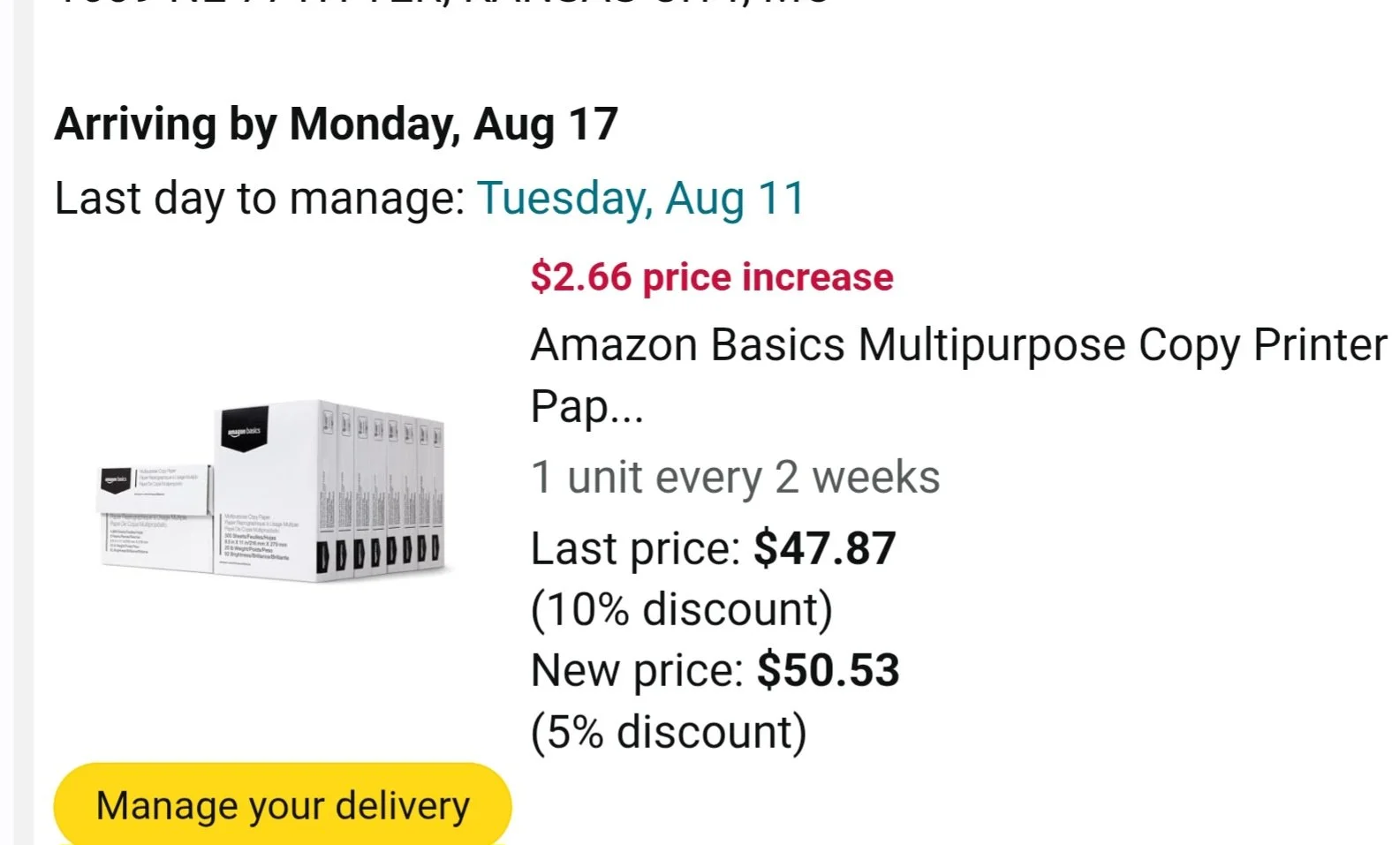
Six years ago, when I started my business as a Notary Signing Agent, I could buy a case of letter paper for about **$26**.
Today, I received yet another notice that my paper supplier is raising prices again.
It's one increase after another.
Paper.
Toner.
Printer maintenance.
Envelopes.
Plastic document sleeves.
Tape.
Gas.
Insurance.
Vehicle maintenance.
Tires.
Oil changes.
Registration.
Business insurance.
Equipment.
Scanners.
Internet.
Phones.
Even something as simple as pens.
A few weeks ago I had to find a new supplier because the pens I prefer had become too expensive. I searched and searched, hoping to find something of similar quality at the old price. I couldn't. My pen costs have essentially doubled.
That may sound insignificant until you realize that we use thousands of pens every year, and because I choose quality pens, borrowers frequently ask if they can keep them. I find myself hesitating—not because I don't want to be generous, but because every small expense keeps climbing while the fees we're offered remain stuck in the past.
I package every loan carefully because I want those documents to arrive looking professional. I use paper envelopes inside plastic envelopes and even reinforce them with tape so they don't arrive wrinkled or damaged.
Every one of those supplies costs more today than it did a year ago.
Meanwhile, our compensation has barely moved.
For the past year I've tried to increase my fees by five or ten dollars whenever possible. Sometimes it works. Often it doesn't.
Instead, I continue to hear the same responses:
*"It doesn't really cost 76 cents a mile to drive."*
*"You should just be grateful for the best job ever."*
*"I'm willing to work cheap for the experience."*
But this isn't about opinions.
It's about math.
Recently I sat down and calculated the true cost of operating my vehicle over the life of the car. I included everything:
* The purchase price
* Monthly payments
* Interest
* Insurance
* Fuel
* Tires
* Oil changes
* Repairs
* Maintenance
* Registration
* Depreciation
Over five or six years, the total cost exceeded **$100,000**.
That doesn't include my printer.
It doesn't include paper.
It doesn't include toner.
It doesn't include internet service, office supplies, licensing, continuing education, taxes, or the thousands of hours spent printing, scheduling, driving, scanning, dropping packages, bookkeeping, and handling cancellations.
Those costs are real whether anyone wants to acknowledge them or not.
The unfortunate reality is that many signing companies and title companies have held the line on notary fees for years while nearly every expense associated with running this business has increased dramatically.
No business can absorb rising costs forever without eventually raising prices.
That's simply how economics works.
I wrote my book because I genuinely care about this profession. I wanted newer notaries to understand the business side of being a signing agent—not just how to notarize documents, but how to build a business that can still exist five or ten years from now.
Three months later, I've sold only twenty-two copies.
Sometimes I wonder whether enough people are paying attention.
Because this industry is approaching a brick wall.
Many experienced notaries are already declining lower-paying assignments because they simply cannot make the numbers work anymore. Others quietly leave the industry every year. If operating costs continue to climb while fees remain frozen, we'll eventually reach a point where experienced professionals can no longer justify staying.
When that happens, borrowers, title companies, lenders, and signing services will all feel the impact.
This isn't a threat.
It's economics.
Businesses that consistently lose money don't survive.
I've completed nearly 5,000 loan signings. I've driven hundreds of thousands of miles. I've invested heavily in equipment, education, and providing borrowers with a professional experience.
I love what I do.
I want this industry to thrive.
But thriving requires businesses that are financially sustainable.
Eventually, every industry reaches the point where prices have to catch up with reality.
I believe ours is getting very close.

The Unpredictable Life of a Notary Signing Agent
The Unpredictable Life of a Notary Signing Agent
There's a famous scene in ER where Dr. Peter Benton tells Dr. John Carter to eat whenever he has the chance, because he never knows when he'll get another opportunity.
I recently heard the same advice in a police novel. An experienced officer told the rookie, "Eat when you can. Use the restroom when you can. You never know when the next call is coming."
I smiled because that's exactly how life works as a notary signing agent.
If I have a few quiet hours, I don't assume I'll still have them twenty minutes from now. An emergency signing can appear without warning, leaving me just enough time to print hundreds of pages, get dressed, gather my supplies, and head out the door.
I can think I'm finished for the night at 8:00 p.m., only to receive a call for a loan that absolutely has to close that evening. By the time I get home, print the documents, drive back out, complete the signing, and return, it may be after 10:00 p.m.
Some mornings I wake up with five appointments on my calendar and end the day with only one because four canceled.
Other days I start with one signing and somehow end up completing five because four more appeared out of nowhere.
Nothing about this business is predictable.
That's why we eat when we can. We stop for the restroom when we can. We fuel the car whenever we have the opportunity. We print when the documents arrive. We grab moments to rest because we don't know if they'll last.
Most people only see us for the 30 or 60 minutes we're sitting at their kitchen table.
They don't see the life built around being ready.
Ready to leave.
Ready to change plans.
Ready to work weekends, evenings, and holidays.
Ready to serve someone else's deadline.
It's one of the unseen sacrifices of being a professional notary signing agent—and one of the reasons flexibility is just as important as experience

Selling Hope Comes With a Responsibility
Selling Hope Comes With a Responsibility
When my daughters were young, I homeschooled them for several years. One of our favorite field trips was the library.
We didn't just read stories. We sat in the reference section with those enormous government career books that analyzed virtually every occupation imaginable. We would flip through page after page discussing what different jobs actually looked like.
How much education would they require?
What did they typically pay?
Which parts of the country had the greatest demand?
Was the field expected to grow, remain stable, or decline?
Those conversations started when my girls were only six, eight, and ten years old. I wanted them to understand that choosing a career shouldn't begin with excitement. It should begin with information.
That lesson stayed with me throughout my own life.
At one point I seriously considered becoming a traveling ultrasound technician. I loved the idea of working independently and traveling to different locations. But my research uncovered something the school wasn't emphasizing.
A local program was graduating far more students each year than there were available positions in the Kansas City area. Unless graduates were willing to relocate, many would never work in the profession they had just spent thousands of dollars preparing for.
That changed my decision.
Later I looked into medical transcription. Again, I became excited before I finished my research. Hospitals were rapidly adopting voice-recognition technology and electronic medical records. The long-term outlook wasn't encouraging. Fortunately, I was able to negotiate a partial refund because the changing job market hadn't been clearly explained before I enrolled.
I also considered earning a degree in history because it could be completed from home. Once again, I researched the employment outlook before committing years of my life and a significant financial investment.
Every time, I asked the same question:
What does the future actually look like?
That is why I struggle with what I see happening in the notary industry today.
There is nothing wrong with teaching notaries.
There is nothing wrong with writing books, creating courses, offering coaching, or mentoring new professionals.
But there is something wrong with selling opportunity without also explaining the reality.
In many parts of the country, the notary signing industry is already heavily saturated. Thousands of new notaries enter the market every year while many experienced professionals compete for the same assignments.
New notaries often hear stories about flexibility, independence, and impressive income. What they don't always hear is that it may take months to receive a first assignment. They don't hear that they may need to register with hundreds of companies before the phone begins ringing consistently. They don't hear about the unpaid cancellations, the equipment costs, the vehicle expenses, the continuing education, the insurance, the taxes, the long days, or the fierce competition from experienced signing agents.
Many eventually succeed.
Many do not.
Neither outcome should be hidden.
When someone pays for a mentorship or a training course, they deserve more than encouragement. They deserve accurate information that allows them to decide whether this business is the right fit for their market, their finances, and their goals.
If a mentor truly cares about the people they teach, market saturation should be part of the very first conversation—not something students discover only after they've invested hundreds or even thousands of dollars.
Selling education is not the problem.
Selling hope without discussing the obstacles is.
The goal shouldn't be to convince everyone to become a notary.
The goal should be to help people make informed decisions.
That's what responsible career guidance has always looked like, whether you're talking about healthcare, education, technology, or the notary profession.
People deserve the truth before they spend their money.
And sometimes, the most valuable advice a mentor can give is, "Research your local market first. This may be a wonderful opportunity—or it may not be the right one for where you live."
That isn't discouraging people.
That's respecting them.
1099 Contract Labor vs W-2 Workers
Hire Professionals. Then Let Them Be Professionals.
Almost every day, I see another notary post in an online group about receiving messages asking, "Have the documents been dropped yet?"
The assignment was scheduled after the last FedEx pickup.
Everyone involved knows the documents cannot go out until the next business day.
Yet the questions keep coming.
I understand why title companies and signing services care. Those documents are important. A delayed package can delay funding, recording, or closing. They have every right to expect that the package will be delivered as soon as reasonably possible.
What I don't understand is why experienced notaries are so often treated as though they need constant supervision.
I've completed nearly 5,000 loan signings over the past six years. Delivering the package is every bit as important as obtaining the signatures. If I fail to return the documents, I don't expect to be paid. That's part of the job.
But being asked repeatedly to explain the obvious—or worse, being told when I should drive to FedEx—is something different.
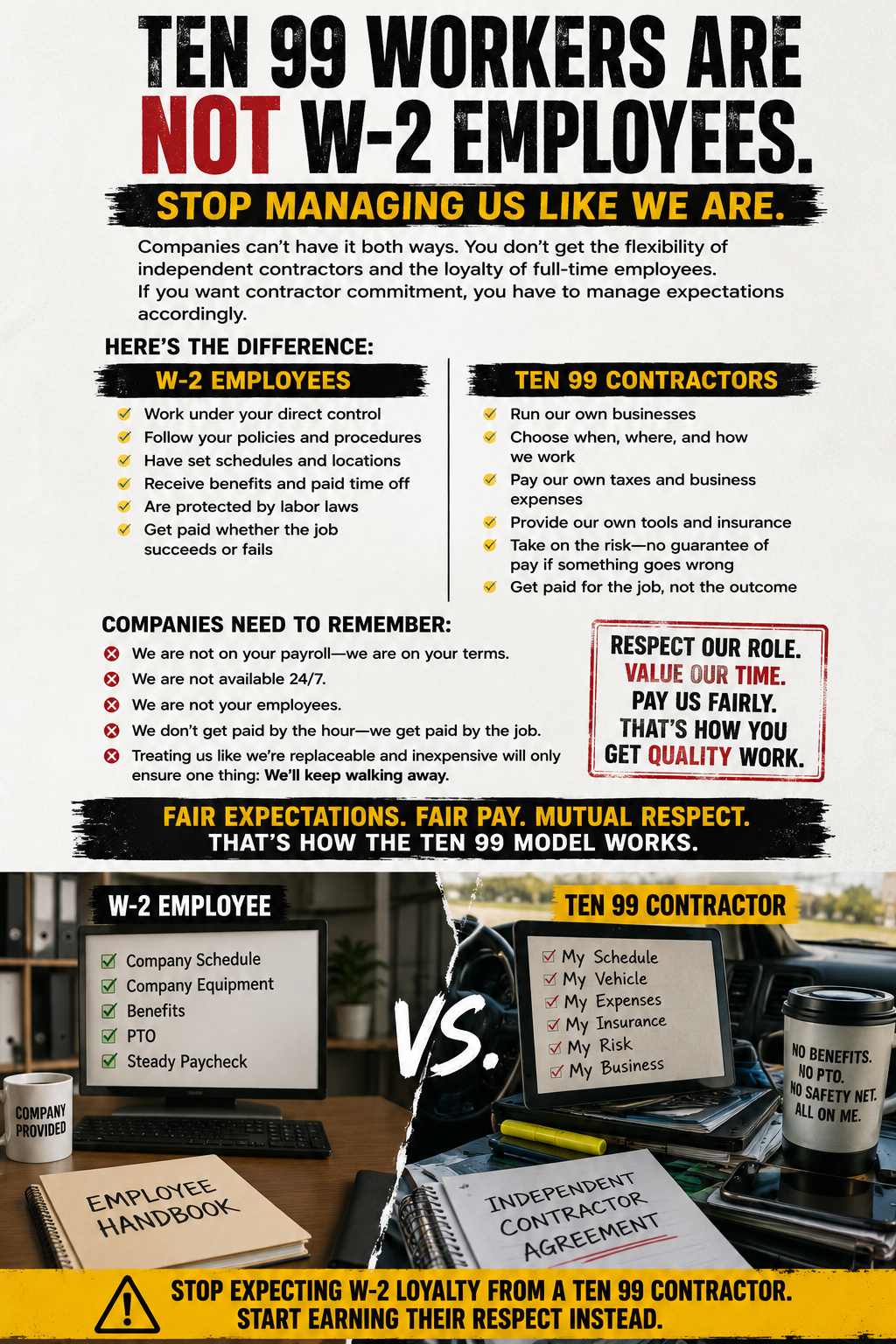
I'm a 1099 independent contractor.
That means I'm responsible for managing my own schedule.
I decide whether today's route makes more sense with one FedEx stop or three. I decide whether tomorrow morning's signing should be completed before making a single document drop. I decide the most efficient use of my time while still meeting my contractual obligation to return the package promptly.
That's exactly what independent business owners do.
Recently, another notary suggested I should make a special trip to FedEx on my day off—even though the package couldn't leave until the following business day anyway.
No.
I already work six long days each week. I'm not making an unnecessary trip simply to satisfy someone's perception that documents should already be sitting in a FedEx office. Tomorrow I have a morning signing. After that signing, both sets of documents will be dropped together. That is the most efficient use of my time, my vehicle, and my business resources.
Some companies even expect notaries to be standing in line when FedEx opens at 8:00 a.m., regardless of what the day's schedule looks like.
Why?
If my first appointment isn't until 10:00 a.m., and both packages can be shipped immediately afterward with no delay in service, what business purpose is served by requiring an extra trip?
Efficiency isn't negligence.
It's good business.
Of course, newer notaries sometimes need reminders. Every profession has people who are still learning.
But there comes a point where experience should earn trust.
If a notary has consistently demonstrated that they show up on time, complete the signing correctly, and return documents promptly, stop managing every mile they drive and every minute of their day.
Hire professionals.
Set clear expectations.
Judge us by the results.
Then let us run the businesses you hired us to operate.

For More Stories From The Road...
Great Service, No False Flattery
I never want to get so big that I stop being responsive.
I ignore obvious spam and the random "Hey, how are you?" messages from strangers. I simply don't have time for small talk with people I don't know. But if you send me a legitimate business question, I'll answer it when I see it.
As businesses grow, more messages inevitably get missed. That's just math.
Notary "coaches" love to talk about relationship-building. I've asked one well-known coach the same business question twice and never got a response. I've had similar experiences with others.
I also noticed a well-known signing service owner is now using what appears to be an AI clone of her voice for content. Whether it's efficient or not, it sends a message to me: I'm too busy to talk to you myself.
I've been self-employed my entire adult life, and here's what I've learned about "building relationships."
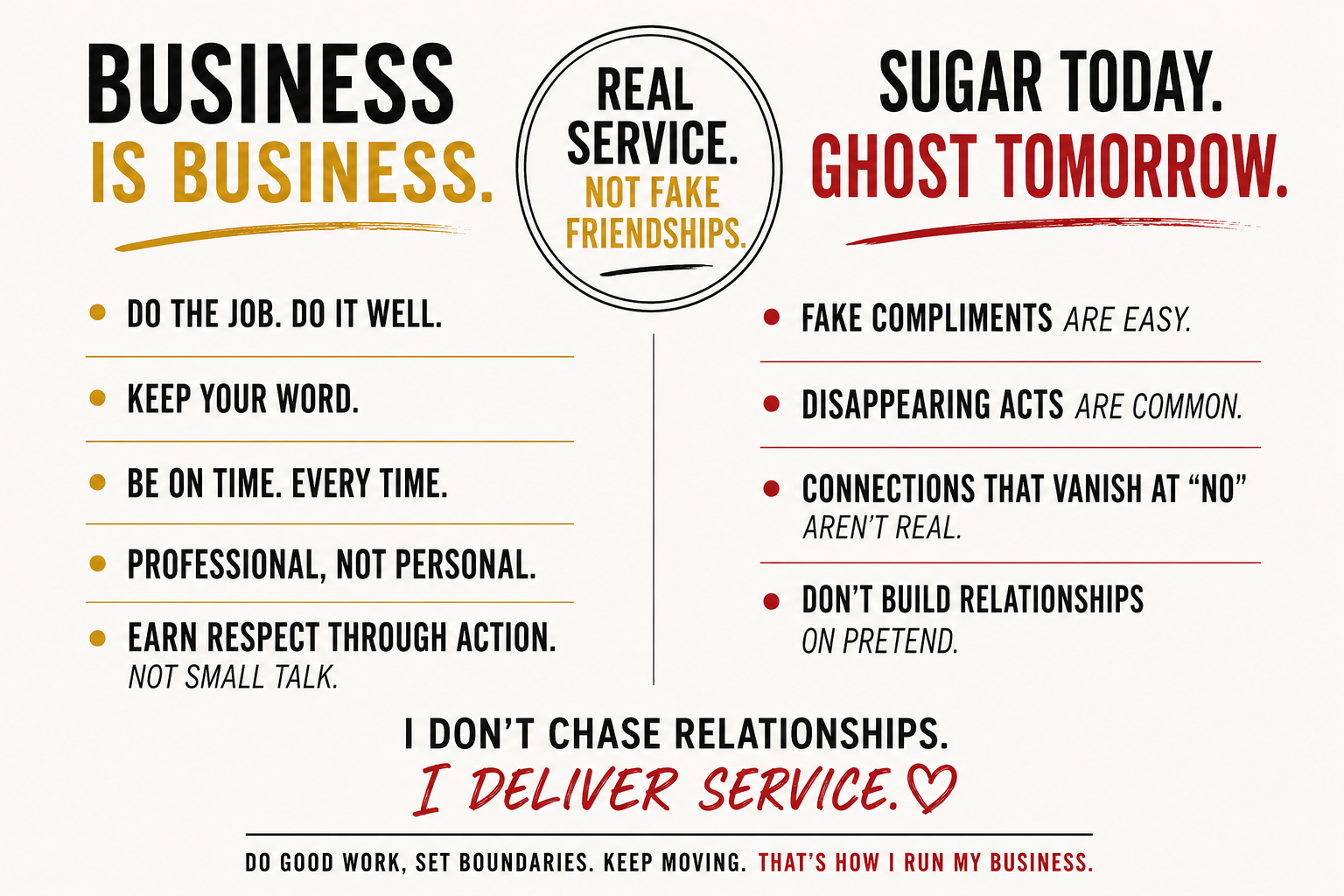
People are often warm, complimentary, and appreciative when you're going above and beyond for them. But the moment you set a reasonable professional boundary—when you say "no" because it's the right answer—some relationships suddenly disappear. Sometimes it takes a few disappointments first, but eventually the mask comes off.
That's why I don't spend much time trying to impress people.
I let my work do the talking.
Show up on time.
Communicate clearly.
Scan documents promptly.
Get the job done right.
Treat me with respect, and you'll get the same from me. That's the kind of relationship I'm interested in building.

The Cost of Convenience
# The Cost of Convenience: What We Lose When We Push Everyone Toward Remote Online Notary
Every few weeks, someone tells me the same thing: "You should really get into RON."
I get why they say it. Remote online notary is fast. It's scalable. You can notarize a document for someone in another state without leaving your kitchen table. On paper, it looks like the obvious evolution of this business.
But I've been doing this in person for almost six years and nearly 5,000 signings, and I keep coming back to the same question: fast for whom, and at what cost?
## We've Already Automated Away Enough
Think about how much of daily life has already been stripped of human contact. We bank from an app. We order food through a screen and pick it up without a word to anyone. We pull through a drive-through window and never see a face beyond a gloved hand passing out a bag. Each of these felt like a small, reasonable convenience at the time. Stacked together, they add up to a life where you can go days without a real conversation with someone outside your own house.
COVID accelerated all of this, and we're still living with the aftermath. People stayed behind closed doors because they had to, and a lot of us saw firsthand what that isolation did to neighborhoods, to older adults, to anyone whose main social contact used to be a errand run or a face-to-face transaction. Remote online notary asks us to take one more human interaction — a moment where two people sit across a table, look at each other, and handle something important together — and move it permanently behind a screen. We're not required to do that anymore. We're choosing to.
## What Actually Happens at the Signing Table
A signing isn't just a stamp and a signature. It's often one of the biggest financial transactions of someone's life — buying a home, refinancing, settling an estate. People are nervous. They have questions they're embarrassed to ask over a chat box. They want to know that the person sitting across from them actually looked at the document, actually confirmed their identity in person, actually cared whether they understood what they were signing.
I've sat with people at their kitchen tables while they cried over a divorce settlement. I've talked a first-time homebuyer through their nerves before they signed. I've noticed something wasn't right with a document and caught it because I was physically present and paying attention, not because I was scanning a screen split three ways. None of that happens through a webcam appointment squeezed between someone's other browser tabs.
## RON Optimizes for the Wrong Thing
The push toward RON treats notarization like a bottleneck to eliminate — friction to remove so the transaction can close faster. But some of that "friction" is the actual point. Verifying identity, confirming someone is signing willingly and with a clear mind, making sure they understand the stakes of what they're putting their name on — that's not red tape. That's the entire purpose of having a notary in the first place. Speed it up too much and you start trading away the safeguard for the sake of the paperwork moving faster.
There's also a real vulnerability angle that gets glossed over. Remote sessions are easier to spoof, easier to pressure someone through off-camera, and harder to catch subtle signs of coercion or confusion that are obvious in person. A screen can be tampered with in ways a kitchen table can't.
## The Personal Cost Nobody Talks About
There's also what RON asks of the notary. To do it right, you need a dedicated, soundproofed space, a household that stays quiet on command for however many hours a day you're taking appointments, and a willingness to trade a job built on being out in your community for one spent alone in a room staring at a webcam. That's a real lifestyle shift, and it's one a lot of people pushing RON don't mention because they're not the ones living it.
I didn't get into mobile notary work to disappear behind a closed door. I got into it because I like being out in the community, meeting people where they are, and being a steady, trustworthy presence in transactions that matter to them. That's not something RON replicates — it's something RON replaces.
## Convenience Isn't Free
I'm not arguing RON should never exist. There are legitimate cases — someone out of state, someone with mobility limitations, a genuine time-zone problem — where remote makes sense. But the industry-wide push to make RON the default, the assumption that every mobile notary should be racing to convert, treats convenience as if it has no downside. It does. We're already living with the social cost of a hundred small conveniences that each seemed harmless on their own. Notarization doesn't need to be the next one.
Some things are worth doing the slower way, in person, with an actual human sitting across the table. This is one of them.

Honest Reviews Shouldn’t Require Courage
Honest Reviews Shouldn't Require Courage
Recently, I posted an honest review of a company after someone in a professional notary forum asked for opinions.
The company owner contacted me.
I expected a brief conversation where we simply disagreed.
Instead, the messages continued for nearly two days.
Several times I explained that I was working, driving between appointments, and didn't have time for a lengthy discussion. The messages kept coming until I eventually removed my comment—not because I believed it was inaccurate, but because I wanted the conversation to end.
That experience made me think about something much bigger than one company.
Independent notaries rely heavily on one another. We don't have a Human Resources department. We don't have managers comparing notes. We have professional communities where we ask questions like:
Do they pay on time?
Do they communicate well?
Are their fees reasonable?
Do they answer the phone when problems arise?
Do they support their notaries when something goes wrong?
Those conversations help business owners make informed decisions about who they choose to work with.
An honest review—whether positive or negative—is part of a healthy marketplace.
No company has to agree with every opinion. If a review is factually incorrect, they have every right to explain their perspective or provide additional information.
What concerns me is when persistence crosses the line into pressure.
If independent contractors begin to feel that sharing their honest experiences will result in repeated calls, texts, or attempts to wear them down until they remove their comments, then the free exchange of professional experiences begins to disappear.
That's not good for notaries.
And ultimately, it's not good for companies either.
The best businesses earn strong reputations by providing excellent service—not by discouraging honest feedback.
As professionals, we should be able to share our experiences respectfully, disagree respectfully, and allow others to decide what weight to give those experiences.
Transparency isn't something to fear.
It's one of the things that makes a profession stronger.
# "You Explained It So Well" — Words No Notary Should Want to Hear
A few weeks ago a borrower left me a review saying I was "great at explaining all the documents." It was meant as a compliment. It made my stomach drop.
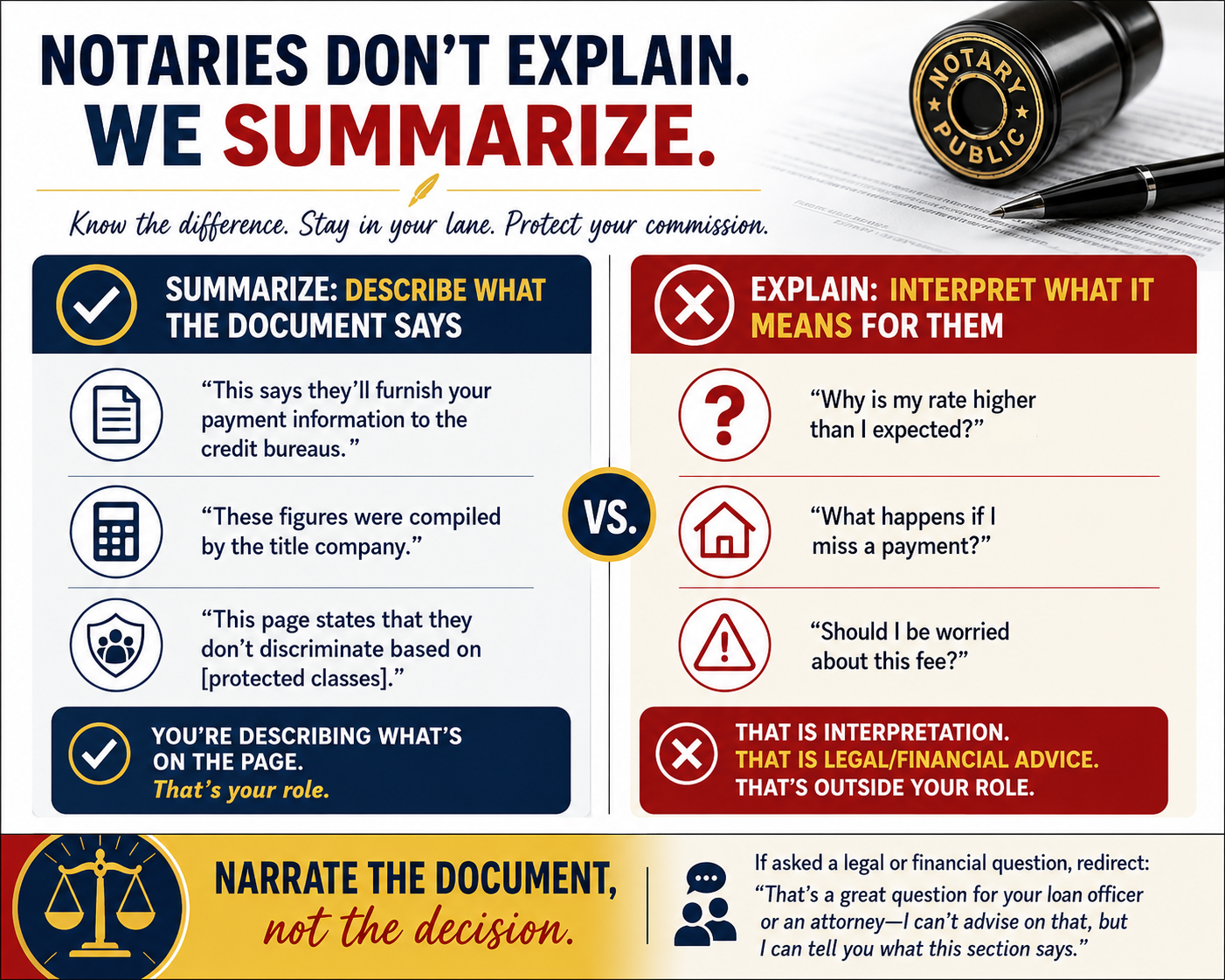
The problem is that notaries don't explain documents. We summarize them. Those words sound interchangeable, but in our profession they separate proper notary work from the unauthorized practice of law.
## What summarizing sounds like
At the table, I say things like:
* "This says they'll furnish your payment information to the credit bureaus."
* "These figures were compiled by the title company."
* "This page states that they don't discriminate based on [protected classes]."
I'm simply describing what the document says. I'm not telling borrowers what it means for them, whether it's a good deal, or what they should do.
## Where "explaining" begins
The line is crossed when borrowers ask questions like:
* "Why is my rate higher than I expected?"
* "What happens if I miss a payment?"
* "Should I be worried about this fee?"
Those require legal or financial interpretation. Even after thousands of signings, that's outside a notary's role.
## Precision matters
The review wasn't malicious. The borrower simply used the closest word they could think of. But if a regulator, title company, or attorney ever read that review, "explained" could suggest I stepped outside my commission.
The answer isn't silence. Borrowers deserve a notary who communicates clearly. The key is to describe what the document states—not what it means for their specific situation. If they need interpretation, direct them to their loan officer or an attorney.
## The takeaway
If a client says you're good at "explaining" documents, take it as a compliment about your communication—and a reminder to check your wording. Summarize what's on the page. Leave the explaining to those licensed to do it.
You Can't Have It Both Ways
You Can't Have It Both Ways
Before I begin, let me be clear about something. This isn't aimed at every signing service or every title company with an in-house notary network. There are some excellent companies out there that treat notaries fairly, communicate well, and don't take anywhere near half the fee. They're good business partners, and this article isn't about them.
This is about the companies that do keep a large percentage of the fee while also expecting the notary to absorb the financial pain every time the market slows down. If that isn't your business model, then this probably isn't about you.
There's a deal in this industry that I've always understood and mostly respected. Signing services and the title companies that manage their own notary networks exist because national lenders and title operations don't want to vet, hire, train, and 1099 a notary in every zip code in the country. So they outsource that job. The signing service goes out, builds the relationships, does the marketing, lands the contracts—and in exchange, they keep a healthy cut of the fee. Sometimes half. Sometimes more.
I don't have a problem with that split, as long as it's fair and the notary is still getting paid enough to make the job worth doing. That's a legitimate business arrangement. Somebody has to do the selling, and selling isn't free.
But here's where the deal falls apart.
The excuse only works one direction
Every time notaries push back on rates that don't leave any real profit—and every time we point out that other notaries keep undercutting each other to take those rates anyway—we get the same answer: the signing services and managed networks are the ones doing the marketing. That's why they earn their cut. Let them do their job.
Fine. I'll take that deal when times are good.
But the second interest rates tick up and refinance volume drops even a little, something changes. The lender is still paying title the same fee. Title is still paying the signing service or their in-house network the same fee. Nothing upstream has changed. Yet suddenly the signing service—or the title company running its own stable of notaries—decides the person at the bottom of the chain needs to eat the difference. They start lopping ten or twenty dollars off signings that were already too thin to begin with. Not because the fee coming in shrank. Because the volume did, and they want to protect their margin on every file that's left.
You can't claim the job and then hand back the risk
This is the part that doesn't add up. If the pitch is, "We deserve our cut because we go out and market, build relationships, and bring you the work," then that has to hold true in a slow market too.
A slowdown isn't a reason to squeeze the notary. It's exactly the moment the marketing you claim to be doing should be earning its keep. If business dries up, the answer isn't to cut what the notary makes on the file that's left. It's to go find more files. More lenders. More title companies. More volume.
That's what I have to do. If my schedule gets thin, I don't get to call up a title company and say, "I'm going to make less on the signings I've already accepted because my calendar isn't as full as I'd like." I go find more companies to work for. I market harder. That's part of being self-employed.
If a signing service or a managed network wants to claim credit for doing that same job—and take a substantial portion of the fee for it—then when business slows, the answer should be to market harder, not simply pass the problem down to the notary.
The fee didn't shrink. Somebody just decided who absorbs the pain
The lender didn't pay title less. Title didn't get paid less by the underwriter. The money coming into the transaction is the same as it's always been. The only thing that changed is who decided to keep their piece whole and pass the shortfall down.
And somehow, it almost always rolls downhill to the person with the smallest piece of the pie and the least leverage to say no.
If you're going to justify keeping the larger share of the fee because you're the one out there building the business, then keep building the business when times get tough. That's the job you said you were doing.
You can't have it both ways.
Fidelity Approved: The Notary World’s Old Boys’ Club
"Fidelity Approved": The Notary World's Old Boys' Club
Let's talk about something that's bugged me for years: getting "Fidelity approved."
If you've been a signing agent for any length of time, you've heard the term. Fidelity National Title — one of the biggest title companies in the country — has this mystique around it. Notaries chase this approval like it's a badge of honor. Signing services ask if you have it. And somewhere along the way, everybody just started accepting that this is how the industry works, without really asking why.
Here's my problem with it.
You can't just apply anymore
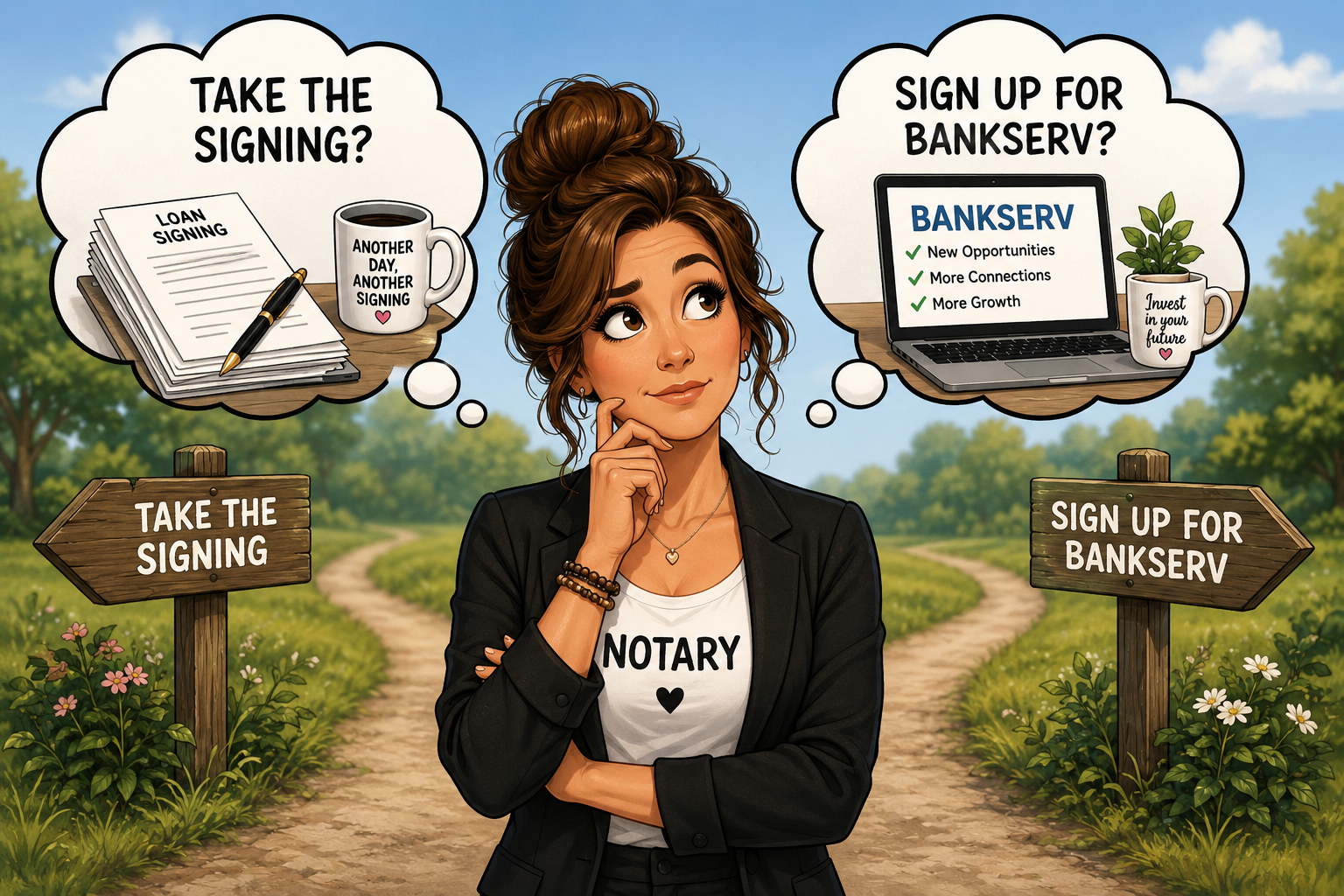
Fidelity stopped taking direct applications from individual notaries a long time ago. Now the main way in is through BancServ — a signing service created specifically to funnel notaries into the Fidelity family. Sounds simple enough, until you look at the actual mechanics: the application only opens for a few hours, a handful of times a year. You get a short window to pass a timed test. Miss it, or fail it, and you wait for the next opening.
I've done almost 5,000 signings in six years. I didn't get here by accident — I got here by being good at this job, consistently, for people who kept calling me back. And yet, whether I'm "Fidelity approved" on any given day depends less on that track record and more on whether I happened to be free during a three-hour application window and passed a quiz.
That's not a quality filter. That's a gate.
And approval doesn't even mean what you'd think
Here's the part that really gets me: being Fidelity approved through one signing service doesn't make you Fidelity approved everywhere. You can be cleared to take Fidelity files through one company and completely locked out through another, with no consistency and no clear way to check your own status except by asking each platform individually, over and over, year after year.
I resign paperwork directly with Fidelity every single year. I still get bounced off signings mid-stream because some service decides I'm "not approved" — even though, on paper, I am. If that sounds like an inner circle instead of a credential, that's because functionally, it is one.
And they weren't even the ones who kept things safe
Here's the kicker. Every year, notaries get the same reminders from these companies about data security — how carefully we're expected to handle sensitive borrower information, how seriously we're supposed to take confidentiality.
In November 2023, Fidelity National Financial had its own systems breached by a ransomware attack. The company confirmed the personal data of 1.3 million customers was compromised. This is the same company whose "approval" is treated as the gold standard for trustworthiness in this industry.
I'm not saying that to pile on — breaches happen to huge companies constantly, and that alone doesn't make Fidelity uniquely bad. But it does undercut the idea that this approval process is really about protecting anyone. If it were, the bar wouldn't be a pop quiz and a lucky scheduling window — and getting hacked wouldn't be a footnote nobody in the industry ever brings up when they talk about "the gold standard."
Where this leaves me
I'm not applying to BancServ because I think it'll change how much work I get — I've built this business on reputation and referrals, not credentials. If I ever do apply, it'll be because some other signing service treats it as a checkbox I need for them, not because I believe it separates good notaries from bad ones.
Experience separates good notaries from bad ones. Track record does. A clean signing history over almost 5,000 closings does. A 30-minute test taken during a random window four times a year does not.
If title companies want to know who's actually reliable, they don't need a gatekeeper company for that. They need to look at the notary's actual work.

Time for a little Notary Math
Time to do a little notary math. The first day is not typical at all. It was a great day. Over all quite easy, but I was still tired by the end of the day. The 2nd day was very nice. All the people were just the sweetest. I completely enjoyed the pace for yesterday. But the fees earned are not enough. Thankfully, I get just enough good days from time to time to save my finances, at least to keep my head above water.
Day 1 (Exceptional Day – Very Rare)
Schedule
7:30 AM – Started printing
9:00 AM – RON signing (0 miles)
10:00 AM – In-person signing (42 miles)
1:30 PM – In-person signing (36 miles)
2:30 PM – In-person signing (38 miles)
4:30 PM – In-person signing (59 miles)
Home by 6:00 PM
Total time worked: 10.5 hours
Mileage
Total miles driven: 175
Expenses
Gas, vehicle wear & tear: $126.87
Printing: $4.10
Miscellaneous expenses ($5 × 5 signings): $25.00
Total expenses
$126.87 + $4.10 + $25.00 = $156.97
Fees Earned
$65
$105
$85
$115
$110
Total fees: $480.00
Net earnings
$480.00 − $156.97 = $323.03
Hourly earnings
$323.03 ÷ 10.5 hours = $30.76 per hour
Conclusion: An excellent day—but a very rare one.
Day 2 (More Typical Day)
Mileage
72 miles
60 miles
62 miles
Total miles: 194
Fees Earned
$95
$95
$100
Total fees: $290.00
Expenses
Gas, vehicle wear & tear: $140.65
Printing: $21.70
Miscellaneous expenses ($5 × 3 signings): $15.00
Total expenses
$140.65 + $21.70 + $15.00 = $177.35
Net earnings
$290.00 − $177.35 = $112.65
Time worked
Assuming approximately 3 hours per signing × 3 signings = 9 hours
Hourly earnings
$112.65 ÷ 9 hours = $12.52 per hour (rounded)
Combined Results (Both Days)
Total net earnings
Day 1: $323.03
Day 2: $112.65
Combined net: $435.68
Total hours worked
Day 1: 10.5 hours
Day 2: 9 hours
Combined total: 19.5 hours
Average hourly earnings
$435.68 ÷ 19.5 = $22.34 per hour

Stop Diversifying, and Become Indispensible
Stop Diversifying. Start Becoming Indispensable.
If you've spent more than five minutes in a notary Facebook group or watched a handful of YouTube videos, you've probably heard the same advice over and over:
"Don't rely on loan signings."
"You need multiple streams of income."
"You'd better diversify."
Maybe I'm in the minority, but I see it differently.
I'm not against diversification. There are certainly people who have built successful businesses by offering general notary work, field inspections, fingerprinting, apostille services, wedding officiating, or any number of other services. If that's your goal, I genuinely hope it works out for you.
But if your passion is being a Notary Signing Agent, I don't think the answer is automatically to abandon your specialty every time the market slows down.
Sometimes the better answer is to become so good at what you do that people remember your name.
Over the last six years, I've completed nearly 5,000 loan signings. I've driven more than 225,000 miles. I've met thousands of borrowers, worked with countless title companies and signing services, and learned something that doesn't get talked about very often.
People notice consistency.
Schedulers notice the signing agent who answers the phone.
They notice the one who communicates.
They notice the one who catches problems before they become disasters.
They notice the one who doesn't create extra work.
Those things don't happen by accident. They come from experience and from staying immersed in your field.
Every hour you spend learning your craft makes you a little more valuable. You become faster without rushing. You recognize documents you've seen hundreds of times before. You learn how to calm nervous borrowers. You know when something doesn't look right, and you know when it's time to call title before a small issue becomes a major one.
That's hard to duplicate if your attention is constantly divided among five or six different businesses.
There seems to be an assumption that specialization is somehow risky while diversification is always safe. I'm not convinced that's true.
Think about almost any profession.
When you need heart surgery, do you look for the doctor who also repairs knees, delivers babies, and treats skin conditions? Of course not. You want someone who has dedicated years to becoming exceptional in one area.
Business isn't always that different.
Specialists often become the people others depend on because they've developed a reputation that can't be replaced overnight.
Does that mean you should never diversify?
No.
Life changes. Markets change. Opportunities come along that make sense. If another service naturally complements your business, that's worth considering.
What I'm pushing back against is the idea that the first response to a slow market should always be, "Go do something else."
Maybe.
Or maybe this is the time to sharpen your skills even more.
Maybe it's time to build stronger relationships with title companies.
Maybe it's time to improve your communication.
Maybe it's time to negotiate your fees with more confidence instead of accepting every low-paying offer that comes across your phone.
Maybe it's time to become the signing agent people ask for by name.
The truth is, every profession has ups and downs.
Real estate agents experience slow markets.
Mortgage lenders experience slow markets.
Builders experience slow markets.
Doctors, accountants, landscapers, and truck drivers all go through economic cycles.
Yet we don't automatically tell every professional to abandon the work they've spent years mastering.
I believe there is tremendous value in becoming known for doing one thing exceptionally well.
If you love this business, don't let every market slowdown convince you that you've chosen the wrong career.
Use the slower season to become even better.
Study your documents.
Review your mistakes.
Refine your systems.
Strengthen your relationships.
Work on your reputation.
Because when business picks back up—and eventually it does—the people who invested in becoming indispensable are often the ones who benefit the most.
Diversification has its place.
But don't underestimate the power of being the person everyone wants to call first.

Would you follow someone with ONLY 6-Years experience?
The last six years have been the most action-packed years of my life. I've worked six and seven days a week, met with signers around 800 times a year, and driven more than 1,000 miles a week. Along the way, I've kept records, made observations, and lived thousands of stories.
I wrote my book to give people the real day-to-day scoop on what full-time Notary Signing Agent work actually looks like. I see far too much marketing that paints an unrealistic picture and leaves people disappointed when reality sets in.
I believe this work is important. For some, it can even be a calling. What it is not is a get-rich-quick scheme.
I didn't write this book to supplement my income. I wrote it because I believe people deserve honesty.
For about the price of a fancy coffee, you can hear from someone who has lived it.
MY LIFE AS A NOTARY SIGNING AGENT: IN TODAY'S GIG ECONOMY
4,800 signings.
225,000 miles.
Six years of stories, lessons, frustrations, and victories.
Nicknames are not Legal Names
This morning, I showed up at a home to help with a refinance signing. The woman handed me her ID, and we had already begun signing into the online documents. I was planning to fill out my journal while they completed that part, and then I would help them with the notarized documents I had brought with me.
Only, she handed me an ID that did not match what was on the documents. Not only was it a nickname, but it wasn't even spelled the same.
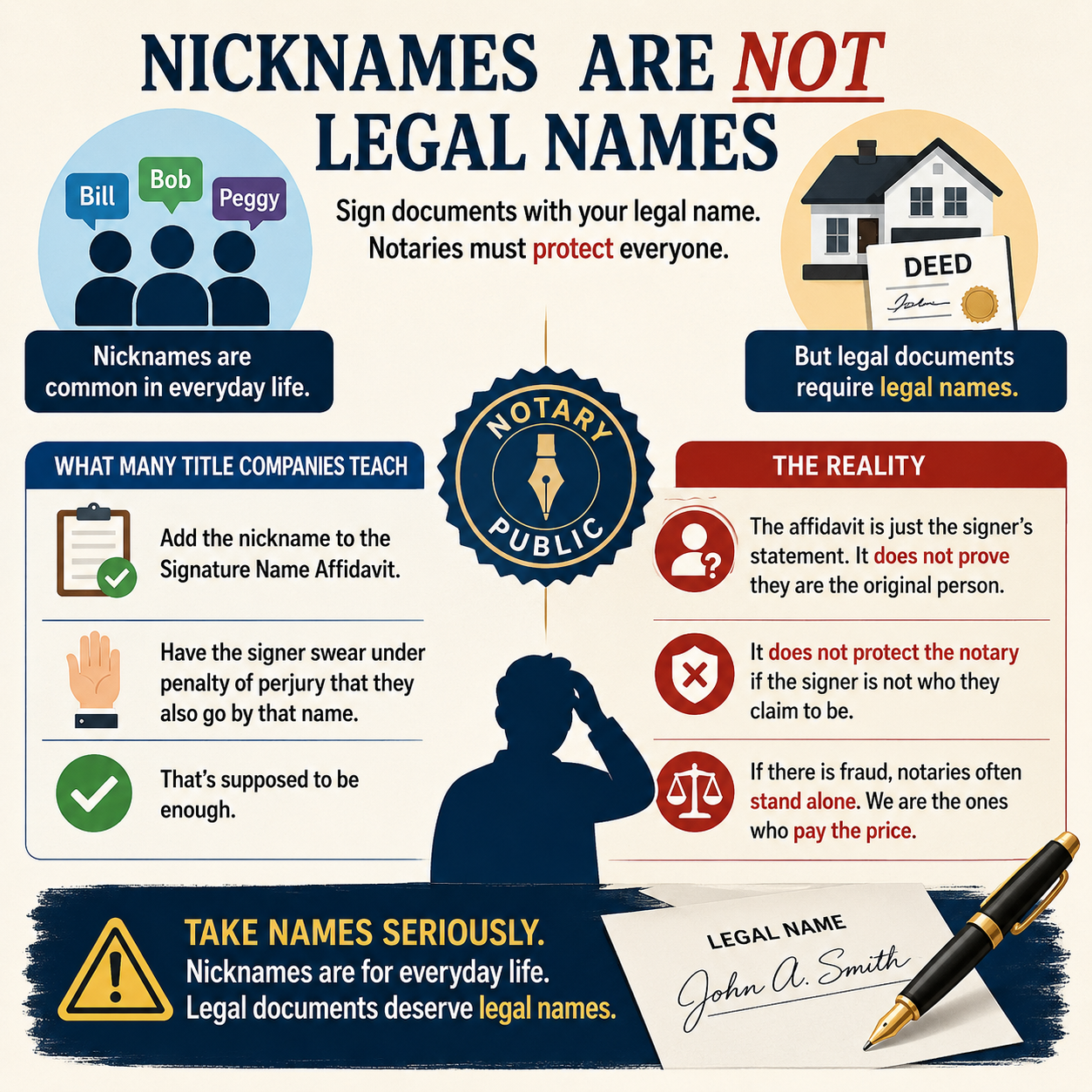
Title companies tell notaries all the time to simply add the variation to the Signature Name Affidavit. When the signer swears or affirms under penalty of perjury that they also go by that name, that's supposed to somehow prove they are the same person. But notary statutes require us to identify people using government-issued ID.
Refinances have to match the way the title was originally taken, and most of the time, the title is taken at a title office with a title officer or a notary on staff to handle the notarized documents. Why are people being allowed to take title in a name that doesn't belong to them?
I lost money on this transaction, left the house hours before my next signing, and won't be paid the full fee. That opens another can of worms, but that's a fight for another day.
If the person sitting before us is actually another person—a second wife, a girlfriend standing in, or someone with a fraudulent driver's license—we are the ones who would pay the price. If that lender ends up in court, the notary will likely face a claim filed against their E&O insurance. And once that happens, the damage to the notary's career can be severe. A claim can result in higher premiums, loss of coverage, or difficulty obtaining insurance in the future.
I'm not saying this woman wasn't who she claimed to be. I'm saying that a Signature Name Affidavit doesn't magically prove identity. It is simply the signer's statement. The burden of identifying the signer still falls on the notary, and "they swore they go by that name" is not much comfort if something turns out to be wrong years later.
Nicknames are fine in everyday life. Legal documents involving hundreds of thousands of dollars deserve something better than "Close enough."
This is why I poured myself into the last 6 months of writing my book. I included a chapter about this issue in my book as well as so many other issues. I am passionate about this industry and I want to see things done right.
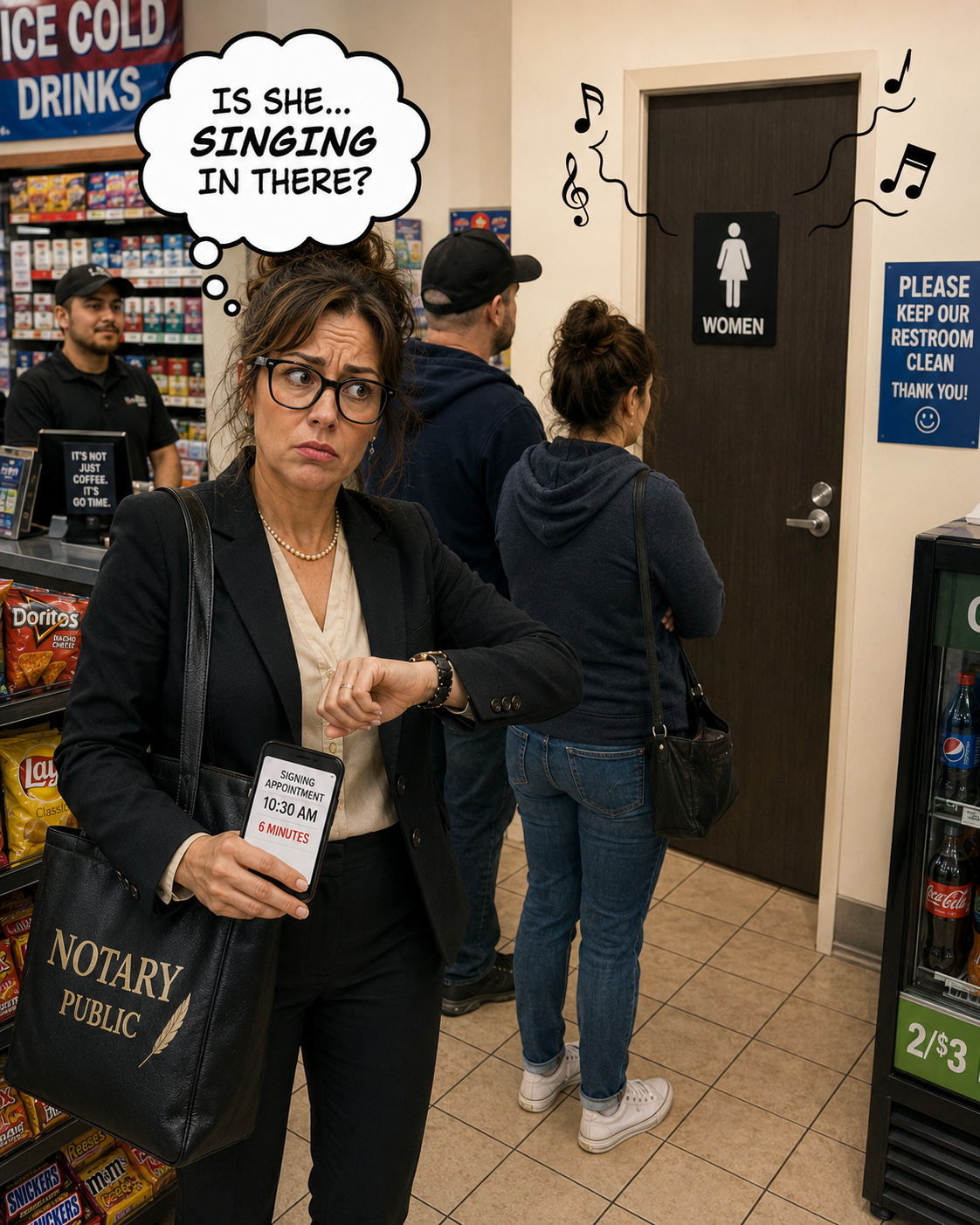
When you are on the go and Gotta GO.
Finding bathrooms is not easy for me in this business. I will wait for hours and be very uncomfortable before asking a customer to use theirs. It's not that I have a problem with messy bathrooms. It's that customers get panicked looks on their faces. Sometimes, they run in and start picking it up. It can embarrass them, and that's not what I am there for. Sometimes, I get the impression they don't want a stranger in their bathroom.
I hate waiting in line at convenience stores. The person in that bathroom can take so long that I am afraid it will smell bad by the time they come out. But often, that's not the case. What were they doing in there? Yesterday, I was waiting, and the woman was singing! I can't stand in one place without major pain, so I was walking up and down the little hallway. I lost over 5 minutes and ended up having to leave without getting to use the restroom. I had to drive down the road toward my other signing and find another restroom. I was late to my assignment by 6 minutes. :(
During COVID, people used it as an excuse to shutter all bathrooms, and even today, the bathrooms are often locked, requiring you to ask for a key. I absolutely HATE doing business with places like that. If I see a sign saying the homeless are not allowed or that we can only use the bathroom if we are buying something, I will NOT buy anything there. If it's unlocked, I will use the restroom and then leave without buying anything, even if I was hungry and had planned on it! The whole attitude these business owners have today is lousy.

Your Convenience is my Priority!
The Notary Signing Agent business was built on a simple idea: take the closing to the signer instead of requiring the signer to come to the closing.
For many borrowers, taking time off work, arranging childcare, fighting traffic, and sitting in a title office is not the easiest option. Mobile notaries help solve that problem by meeting signers where they are most comfortable—at their kitchen table, their office, a coffee shop, a hospital room, or wherever life happens to be taking place that day.
Title companies do an incredible amount of work behind the scenes, but they are also busy environments. Phones ring constantly. Walk-in customers arrive with questions. Signers sometimes show up early, late, or unexpectedly. Documents need corrections. Schedules change throughout the day. Employees are often juggling multiple closings and putting out fires at the same time.
As a signer myself, I've experienced appointments being moved several times in the same day. I've also heard countless similar stories from borrowers over the years. Traditionally, setting aside an entire day for a closing wasn't unusual because the timeline could change repeatedly.
Mobile notaries help reduce much of that disruption. Instead of asking the signer to rearrange their entire day around the closing process, we bring the closing to them. The signer can often remain at home, stay at work, recover in a hospital room, or continue with their normal routine until it is time to sign.
At its core, that's what this business was founded to do: make the signing process easier, more convenient, and less stressful for the people signing the documents.
Somewhere along the way, someone got the bright idea of waiting until the documents were actually ready and then scheduling an appointment around the convenience and comfort of the signer. Just like that, a whole new industry was born.
Sometimes I see people in the groups ask whether it's okay to insist that signers meet in a public location. In my opinion, that goes against the very reason our business exists. We are supposed to bring the service to them.
That said, there are times when a signer's home simply is not conducive to completing a signing. If there is nowhere to sit and they want to stand at the kitchen counter while signing 100 to 200 pages of documents, I can't accommodate that. In those situations, I may have to suggest moving the signing to the nearest McDonald's, Starbucks, library, or another suitable location.
Sometimes notaries report dealing with overwhelming urine odors, whether from animals or people, cockroaches that are visible everywhere, or even dog and cat waste throughout the home. I once went to a house where there was so much cat waste in the yard and on the walkway that I couldn't reach the front door without getting it on my shoes. Another time, I visited a home that was in such poor condition that I had to pull over on the side of the road afterward because I became physically sick.
We have to strike a balance between serving the signer and looking out for ourselves when necessary. Most of the time, I can tolerate some discomfort because that's part of the job.
Sadly, I can no longer stand for extended periods. Every second I am on my feet, the pain increases. If I attempted to stand through a signing at a kitchen counter, I would pay for it for days afterward. I've done enough of those signings over the years to know exactly what the consequences will be. Today, it's not just uncomfortable—it's simply no longer possible.
The goal should always be to accommodate the signer whenever reasonably possible. After all, that's why this industry was created in the first place. But there are times when a small adjustment is necessary to make sure the signing can be completed safely and effectively for everyone involved.