

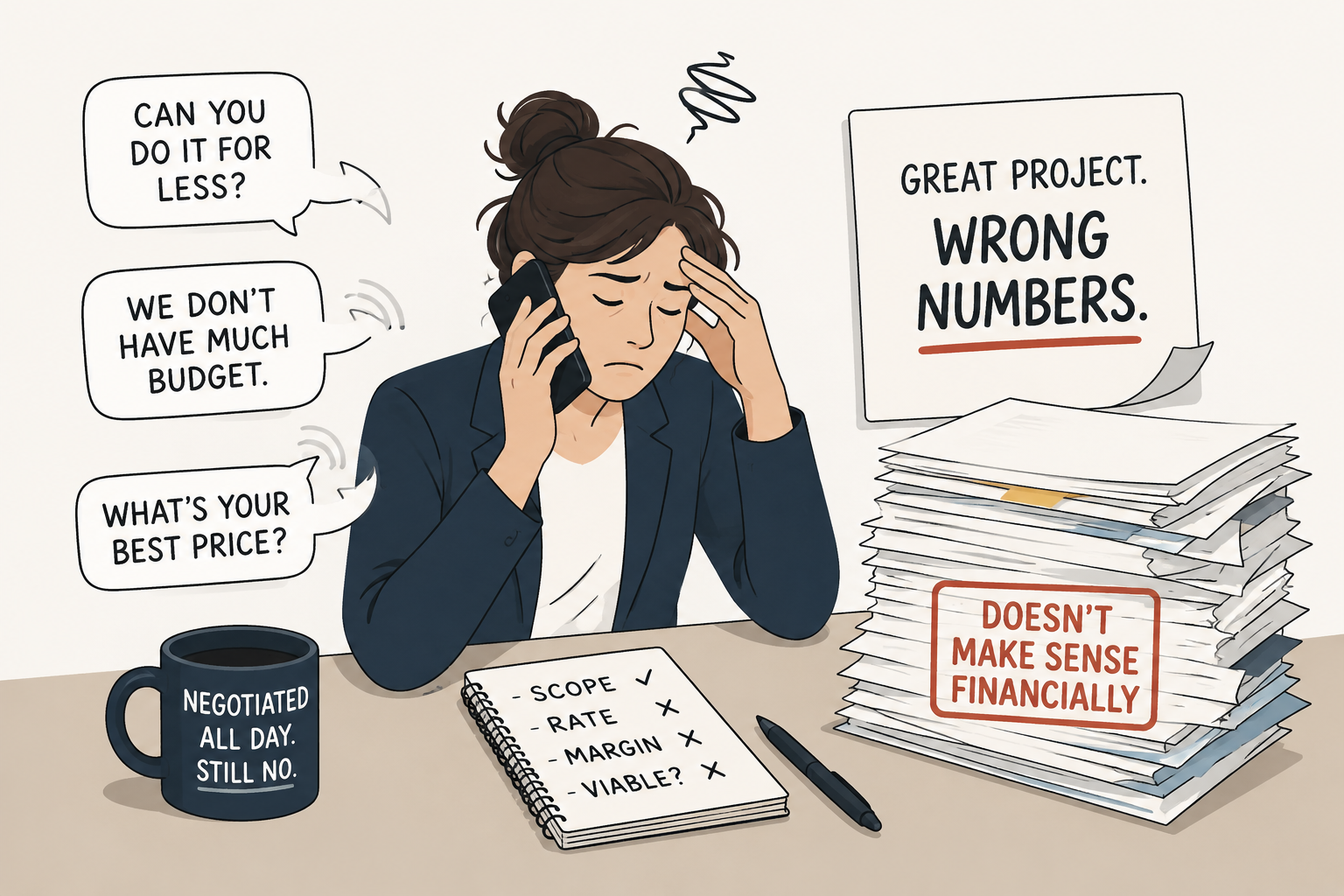
The Hidden Cost of Low-Fee Signing Assignments
The Hidden Cost of Low-Fee Signing Assignments
Today I attempted to negotiate for two signing assignments that were far outside my normal service area. One was located about an hour and a half away, requiring roughly three hours of round-trip driving. The other was approximately one hour and ten minutes away, totaling about two hours and twenty minutes of driving time.
In both cases, the travel time was only part of the equation. Any realistic fee calculation must also account for the time spent at the signing table, which is often around an hour. When you add travel, appointment time, printing, vehicle expenses, insurance, supplies, administrative work, and the expertise required to complete the assignment correctly, it becomes clear that these jobs cannot be evaluated solely on the number attached to the order.
What was frustrating was watching these assignments start at fees below $100 and then return repeatedly throughout the day with only small increases each time. Instead of offering compensation that reflected the actual time and expense involved, the hiring company appeared to be testing the market to see how little someone would accept.
I declined both opportunities because the numbers simply did not make business sense.
Later in the evening, one of the assignments appeared on Snapdocs. This is a familiar pattern in the industry. When a signing service cannot find one of its regular direct notaries willing to accept a low fee, the order is often pushed to a broader platform where hundreds or even thousands of agents can view it.
The challenge is that many of the agents seeing the assignment may be newer to the business. Without fully understanding their operating costs, they may focus only on the fee being offered rather than the total time and expenses required to complete the job. What appears to be a profitable assignment on the surface can quickly become a money-losing proposition when all costs are considered.
This isn't a criticism of new notaries. Every experienced professional was once new. The real issue is that many signing services rely on a constant supply of inexperienced agents who have not yet learned how to calculate profitability. As long as someone is willing to accept an assignment at an unsustainable fee, there is little incentive for companies to offer compensation that accurately reflects the work involved.
Running a successful notary business requires more than simply staying busy. It requires understanding costs, valuing time, and making decisions that support long-term profitability. Sometimes the most professional decision is not accepting an assignment, but declining one.
Not every job is worth doing. A full calendar means very little if the work on it fails to generate a reasonable return. Experienced notaries know that profitability—not activity—is what ultimately determines the success of a business.

On My Honor…
# My Business Mission Might Have Started in Girl Scouts
The other day I was sitting here thinking about mission statements. Every business website seems to have one. Companies spend hours trying to come up with the perfect words to explain who they are, what they stand for, and why they do what they do.
As I was thinking about it, something unexpected popped into my head: the Girl Scout Promise.
I was a Girl Scout from first grade through sixth grade. Like many girls, I stood in meetings and repeated those words over and over again. At the time, I probably didn't realize how much they were shaping the person I would become.
The Girl Scout Promise says:
"On my honor, I will try:
To serve God and my country,
To help people at all times,
And to live by the Girl Scout Law."
As I sat there thinking about it, I realized that those simple words have followed me throughout my life.
When I became a wife, a mother, a grandmother, and eventually a business owner, I never really sat down and wrote a mission statement. Yet somehow, I've been living one all along.
As a Notary Signing Agent, my job isn't just about stamps and signatures. Every day I meet people who are buying homes, selling homes, refinancing, settling estates, signing powers of attorney, and handling some of the most important moments of their lives. Many are excited. Some are nervous. Some are overwhelmed.
My role has always been to help people.
Not to pressure them.
Not to sell them something.
Not to take advantage of them.
Just to help.
That doesn't mean I always agree with everything happening in the industry. In fact, anyone who has followed my writing knows that I speak up when I see unfairness, misinformation, or practices that hurt notaries. I believe in standing up for what is right, even when it isn't popular.
Maybe that comes from the Girl Scout Law too.
To be honest and fair.
To be responsible for what I say and do.
To be courageous and strong.
Those values don't just apply to children earning badges. They apply to adults running businesses as well.
When I wrote My Life as a Notary Signing Agent: In Today's Gig Economy, my goal wasn't to sell a course or convince people that becoming a notary is easy money. My goal was to tell the truth. The good, the bad, the funny, and the frustrating.
Looking back, maybe that was my mission statement all along.
Serve God.
Help people.
Tell the truth.
Treat people fairly.
Stand up for what is right.
Not a bad foundation for a business.
And apparently, not a bad lesson for a little Girl Scout either.

How did I get started?
People ask me all the time how to get started in this business and how to find signings.
I really haven't needed to advertise because I've stayed very busy on the loan signing side of things. In my case, because I did start in 2020 with the refi boom and all, they were looking for bodies.
During the time that I was waiting for my commission to come through, I spent 15-hour days sitting with my computer in my lap, going through every single Facebook group I could find, reading and taking notes on the names of signing companies. I learned about the basic databases and the couple that it's okay to pay for, like the ones that cost $5 a year or $60–$70 a year to belong to. I signed up for those, and they had lists of signing companies.
So I started going through those lists, and many of those companies were either out of business or had bad reviews, etc. I had to pick through those lists very gingerly to find good ones to sign up with. Of course, many of the companies I signed up with I never heard from again, or I've only heard from once or twice.
I actually lost 15 pounds in that first six weeks because I wouldn't leave my computer. It was nuts because every single company you sign up with requires an application of sorts. Some of them are quick and easy, but others are not. The ones that make you apply as if you're getting an actual job require you to upload everything.
At that time, I didn't have all of my credentials yet, so I had to keep pretty accurate lists of what I needed to go back to when everything was finally in place. So it was a big deal—not a few hours a day. I'm talking about living and breathing it for the first several months.
But the thing is, since then, loan signing has kept me busy. Not incredibly lucrative, no. Even though I work primarily for title companies, it's not direct in the sense that they pay the full fee everybody always talks about. Even local title companies that hire notaries locally tend to lower those payments to about the same as what you would get on Snapdocs, or very little more.
In fact, I don't work nearly as much on Snapdocs anymore. I still do maybe six or eight signings a month through them. I used to do 20 a month from Snapdocs, but I now do 70 to 80 signings a month, and most of those come from major title companies. They don't pay any better than signing services do. In fact, the few companies I still work for through Snapdocs often pay me better than the title companies.
I say that to say every area is going to have its own title companies, and some are going to be better than others. The same thing can be said of signing services. If I really wanted to make better money, I would probably spend more time looking for companies I've never heard of before.
All of that is kind of exhausting. No, not kind of exhausting—it is absolutely exhausting.
I remember back when I was doing all that, every time I found a company to sign up with and then saw the list of things I needed to do, many of them didn't just want an electronic upload. They wanted us to compile everything together, print it out, sign it, or do whatever was needed, and then send it all back in one file.
I was pretty convinced they did all of that as a way to see just how quickly and thoroughly we could do it. After all, we needed to learn how to use our printer, our scanner, email, and how to follow instructions. Oftentimes they had little initial spots hidden throughout the paperwork.
It's like an audition.
They want to see how we do.
And apparently, I passed all those tests.